
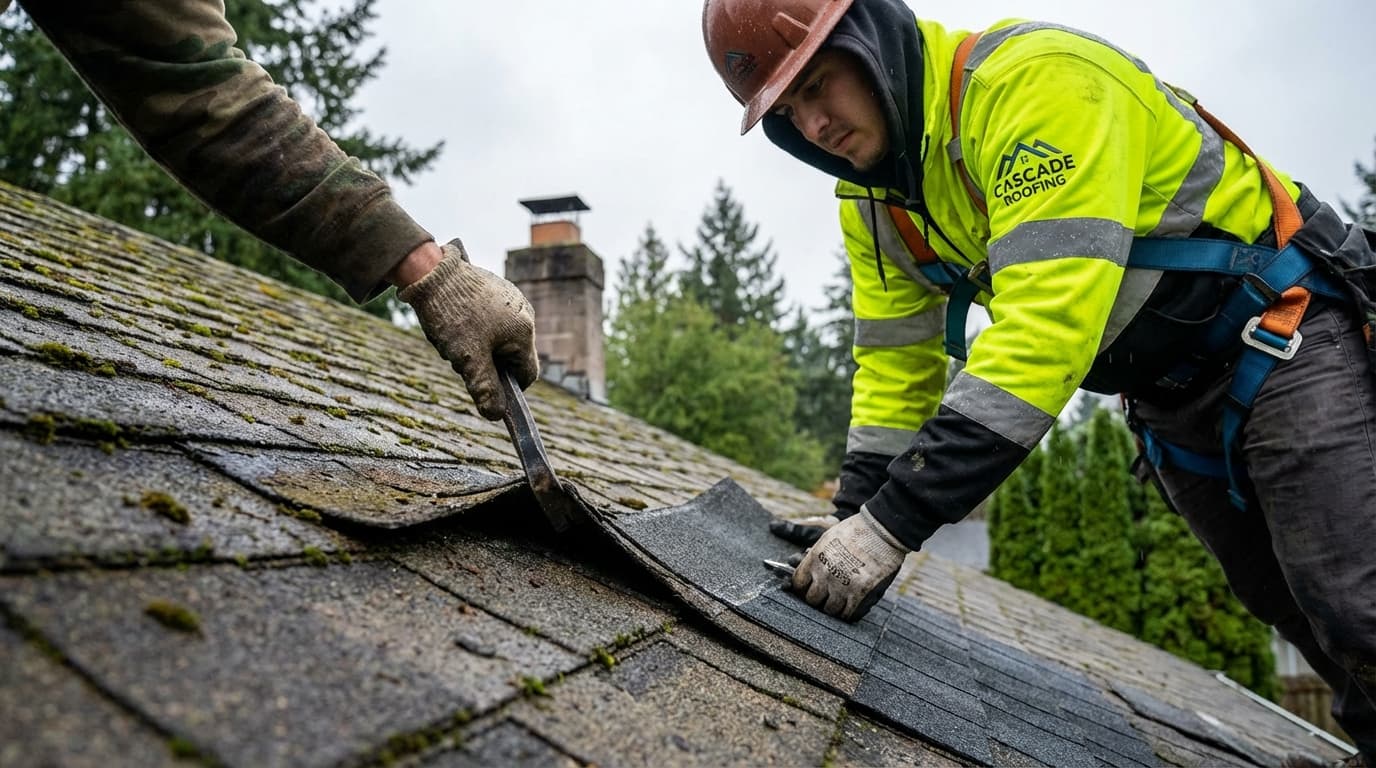
Roof Repair in Oregon
Targeted roof repair in Oregon addresses a specific failure, an active leak, missing shingles after a windstorm, deteriorated flashing, valley damage, without touching the rest of a sound roof. Most Oregon repairs run $350 to $3,500 depending on the cause and where it sits on the roof. The judgment call is whether the repair is fixing a discrete event or masking systemic end-of-life deterioration that replacement will solve more cleanly.
When Oregon Homes Need Repair (and When They Don't)
Eugene roofs leak in predictable places: failed flashing at chimneys, skylights, and plumbing vents; valley flashing that has deteriorated under sustained moss pressure; wind-lifted shingles on the eaves of north-facing slopes; and pipe boots that have cracked from UV cycling on south-facing slopes. Most of these are repair situations on a roof that still has years of life left. The trap homeowners fall into is repairing the symptom on a roof that has reached the end of its useful life: chasing one leak this season, a different leak the next, and watching $400 repair bills pile up while the deck quietly rots. The contractors in our network are honest about which situation you're in. The 30% rule is a reasonable test: if less than 30% of the roof shows damage and the surrounding shingles still have 8-plus years of life, targeted repair wins. If damage is spread across multiple slopes, granule loss is widespread, or the roof is past 20 years in a canopied Eugene neighborhood, replacement delivers better value than continued patching.
Our Roof Repair Process
Damage Source Identification
Identifying where damage shows is easy. Identifying the actual source is harder. Water that drips through a kitchen ceiling rarely enters at that spot, it can travel along rafters and decking for several feet before finding a path through. A proper inspection covers the roof surface, the attic space, every penetration, and the flashing at every transition. The inspector should be able to trace the leak path from entry point to interior symptom in writing.
Written Scope and Fixed-Price Quote
A repair scope identifies the specific cause, the materials to be used, and the total cost before any work begins. For insurance-related repairs this documentation is also the basis for your claim. Avoid contractors who give a verbal quote and want to start same-day, the ambiguity at this stage creates the disputes that show up in CCB complaint records.
Targeted Repair Execution
Only the failed area is addressed. Flashing repairs require complete removal of the failed material before new flashing goes in, sealing over deteriorated flashing is a six-month fix at best. Shingle replacements match the existing material as closely as possible for appearance, though perfect color match on a weathered roof isn't realistic.
Verification and Documentation
After repair the area is inspected from both the exterior roof and the interior attic to confirm a watertight result. Where appropriate, controlled hose testing confirms the repair before the crew leaves. Written record of the repair scope and materials used goes to the homeowner for warranty and insurance documentation.
Materials Comparison
Shingle Replacement
$250-$900Lifespan: Matches remaining roof lifePROS
- + Restores watertight surface at specific damage points
- + Preserves the rest of the roof investment
- + Often same-day turnaround on small jobs
CONS
- - Only effective if surrounding shingles are still in good condition
- - Color match is imperfect on weathered roofs (5-plus years out)
- - Does not address underlying ventilation or systemic deck issues if present
Flashing Rebuild
$350-$1,400Lifespan: 15-20 yearsPROS
- + Addresses the most common source of Oregon leaks (chimney, skylight, plumbing vent, valley)
- + Properly installed flashing outlasts the surrounding shingles
- + Stops water at the entry point rather than treating ceiling symptoms
CONS
- - Requires complete removal of failed flashing, caulk-only fixes will fail in one to two wet seasons
- - May require pulling adjacent shingles to access flashing properly
- - Quality varies; inspect the finished work before final payment
Emergency Tarp
$200-$700Lifespan: Weeks to a few monthsPROS
- + Immediate protection during a storm event or while awaiting permanent repair
- + Prevents secondary water damage while the permanent repair is scheduled
- + Important for insurance: documents mitigation, protects the claim
CONS
- - Not a permanent solution. Schedule the actual repair within weeks
- - Improper tarping can trap moisture and worsen deck damage
- - Must be weighted and secured to handle wind without flying off
Frequently Asked Questions
How do I know if I need a repair or full replacement?
If damage is concentrated in one area (less than 30% of the roof) and the surrounding shingles still have 8-plus years of life, targeted repair is the better call. If granule loss is widespread, you've had leaks in multiple separate locations, or the roof is past 20 years and sits under heavy Eugene canopy, replacement saves money long-term over continued patching. A Oregon contractor walking the roof should give you an honest read on both options with their reasoning in writing.
Will my insurance cover roof repair in Oregon?
Storm damage (wind, hail, falling branch) is typically covered. Wear-and-tear and deferred maintenance are not. The key steps: document damage with dated photos before any work, report the claim promptly rather than waiting, and get a written assessment from a CCB-licensed contractor to support the claim. If the adjuster's number comes in low, a contractor's written scope of work is the leverage you need to request a supplement.
Can roof repairs be done in the rain?
Emergency tarping, yes, that should happen in any weather to prevent secondary damage. Permanent shingle and flashing repairs need dry conditions because the sealants and bonding strips need a dry surface to set. A repair made in the rain can look complete and fail within months. Most Oregon crews tarp and stabilise in the wet, then schedule the permanent fix for the next dry window. Lead times after major storms extend to 1-2 weeks.
How long does a typical Oregon repair take?
Targeted repairs (replacing a section of shingles, rebuilding flashing at a chimney or skylight) are done in 2 to 6 hours by a single crew. More extensive repairs across multiple locations or full valley reconstruction can run a full day. Emergency tarping is usually arranged within 24 to 48 hours of a storm event.
What are the most common leak sources on Oregon roofs?
In order of frequency: failed flashing at chimneys, skylights, and plumbing vents; deteriorated valley flashing under sustained moss pressure; wind-lifted or missing shingles on north-facing eaves; blocked gutters that back water under eave shingles; and cracked pipe boots on south-facing slopes. The majority of Oregon leaks don't originate in the field of the shingles, they happen at penetrations and transitions where materials meet.